
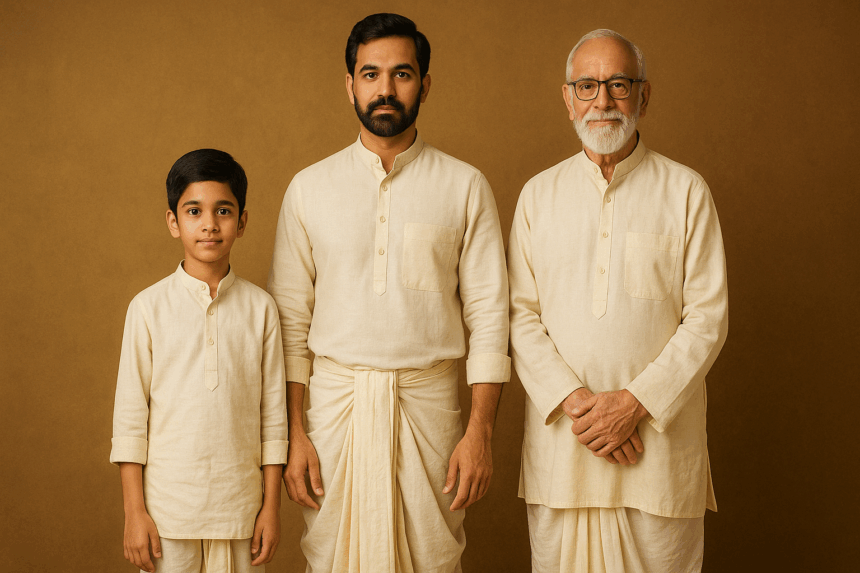
India is a land of diverse cultures, traditions, and heritage, and its clothing styles reflect this vast richness. Among the oldest and most iconic traditional dresses of Indian men is the dhoti kurta. This attire is not just a piece of clothing but a cultural symbol that carries centuries of history, spiritual values, and regional variations. Even though fashion trends have changed drastically in modern times, the dhoti kurta still holds a special place in Indian society, often associated with dignity, tradition, and timeless elegance.
Historical Background of Dhoti Kurta
The dhoti is perhaps one of the oldest garments known to Indian civilization. References to the dhoti can be traced back to ancient scriptures like the Vedas and epics such as the Mahabharata and Ramayana. In Sanskrit, it was referred to as Vastra, a cloth to be worn, and was considered a dignified and modest attire for men. The dhoti is essentially a rectangular piece of unstitched cloth, usually ranging between 4 to 6 yards, that is wrapped around the waist and legs in a particular style.
The kurta, on the other hand, is a tunic-like upper garment that complements the dhoti. The word kurta originates from Persian, but its use in India dates back centuries. Initially, it was a simple long shirt worn by commoners, saints, and scholars. With time, it evolved into different styles – plain cotton kurtas for daily wear and rich silk or embroidered kurtas for ceremonial occasions. Together, the dhoti and kurta became a traditional ensemble for Indian men, symbolizing both simplicity and cultural identity.
Cultural and Regional Significance
The dhoti kurta is worn across India but is styled differently in various states, reflecting regional diversity:
- North India: In Uttar Pradesh, Bihar, and Haryana, men wear plain white dhotis with long kurtas, often accompanied by a gamcha (towel) on the shoulders.
- West Bengal: The Bengali style of dhoti, known as dhuti, is tied in a way that creates pleats in the front. It is usually paired with a kurta called panjabi, especially during Durga Puja and weddings.
- Maharashtra: Here, the dhoti is called dhotar and is usually shorter, allowing ease of movement for agricultural work.
- South India: In Tamil Nadu and Kerala, the dhoti is known as veshti or mundu. It is often paired with an angavastram (shawl) instead of a kurta. In Andhra Pradesh and Telangana, it is referred to as pancha.
- Punjab and Haryana: Traditionally, farmers wore dhoti with kurta or angarkha, symbolizing rural pride and simplicity.
Each region not only has its unique draping style but also uses different fabrics, colors, and patterns, making the dhoti kurta a versatile garment.
Symbolism and Identity
The dhoti kurta is more than just clothing; it carries symbolic meaning:
- Spiritual Symbolism: In Hindu culture, the dhoti is considered a sacred garment, especially for religious rituals, temple visits, and festivals. Priests and saints often wear dhotis while performing pujas.
- Cultural Pride: The attire represents an Indian man’s connection to his roots. Even national leaders like Mahatma Gandhi, who adopted the dhoti as his main attire, used it as a symbol of self-reliance and simplicity during the freedom struggle.
- Social Status: In earlier times, the quality of the dhoti and kurta reflected a person’s status. Rich fabrics like silk and zari embroidery were reserved for the elite and special ceremonies.
- Occasions and Traditions: From weddings and festivals to political rallies, the dhoti kurta continues to mark important occasions in India.
The Art of Draping a Dhoti
One of the unique aspects of the dhoti is its versatility in draping. Unlike stitched trousers, the dhoti requires skill to tie properly. The basic process involves wrapping the cloth around the waist, bringing it between the legs, and tucking it securely at the back or front. Different regions have different draping methods – for instance, the Bengali style has elaborate pleats, while the South Indian style is simpler and more practical.
Wearing a dhoti also requires grace and confidence. For many young men today, it might seem challenging compared to modern trousers, but once mastered, it provides unmatched comfort, especially in hot climates.
Dhoti Kurta in Modern Times
With globalization and western influence, dhoti kurta gradually lost its everyday popularity, especially in urban areas. Jeans, trousers, and shirts replaced traditional attire for daily wear. However, the dhoti kurta continues to make a strong presence in certain contexts:
- Festivals and Weddings: Men often prefer wearing dhoti kurtas during Diwali, Durga Puja, Pongal, Onam, and weddings, as it adds a touch of tradition and grandeur.
- Political Identity: Many politicians still wear dhoti kurtas as a symbol of being connected to the common people.
- Fashion Industry: Designers have revived the dhoti in modern styles, creating dhoti pants paired with kurtas or jackets, making them trendy for contemporary fashion lovers.
- Cultural Representation: In theatre, classical dance, and folk performances, the dhoti kurta remains an essential costume.
Fabrics and Styles
Traditionally, cotton was the most common fabric used for dhoti kurtas due to its comfort and suitability for India’s climate. For special occasions, silk, tussar, and khadi are also popular. In modern fashion, designers experiment with linen, brocade, and blended fabrics.
Some popular styles include:
- Plain white cotton dhoti kurta – symbol of purity and simplicity.
- Silk dhoti kurta – usually in bright colors with golden borders, worn during weddings.
- Embroidered kurta with plain dhoti – a fusion of tradition and elegance.
- Dhoti pants with designer kurtas – modern adaptation for younger generations.
Dhoti Kurta vs. Western Wear
While western clothing offers convenience, the dhoti kurta provides cultural identity and comfort. It allows the body to breathe, making it ideal for hot weather. More importantly, it connects the wearer to Indian traditions, something western clothes cannot replicate. However, due to its complex draping and lack of practice among younger generations, it is often reserved for special occasions rather than daily use.
Revival and Global Influence
Interestingly, the dhoti kurta is not just confined to India anymore. With increasing cultural exchange, yoga, and spiritual tourism, many foreigners have adopted the dhoti as a symbol of Indian spirituality. Designers across the world have also showcased dhoti-inspired garments on international runways.
The revival of khadi by Mahatma Gandhi has also boosted the popularity of traditional attire. Many young Indians today are proudly returning to wearing dhoti kurtas, especially during festivals, as a statement of heritage.
Conclusion
The dhoti kurta is more than a traditional outfit – it is a reflection of India’s soul. It represents simplicity, elegance, spirituality, and cultural richness. Though modern fashion has diversified clothing choices, the charm of the dhoti kurta remains timeless. From the humble cotton dhoti worn by farmers to the grand silk dhotis of weddings, this attire tells stories of India’s past and continues to shape its cultural present.
In today’s world, where fast fashion dominates, the dhoti kurta serves as a reminder of sustainable, handmade, and heritage-rich clothing. It connects generations and regions, weaving together the fabric of Indian identity. Truly, the dhoti kurta is not just an attire but a celebration of tradition and timeless grace.


